Advances in Targeted Therapies for Melanoma Treatment

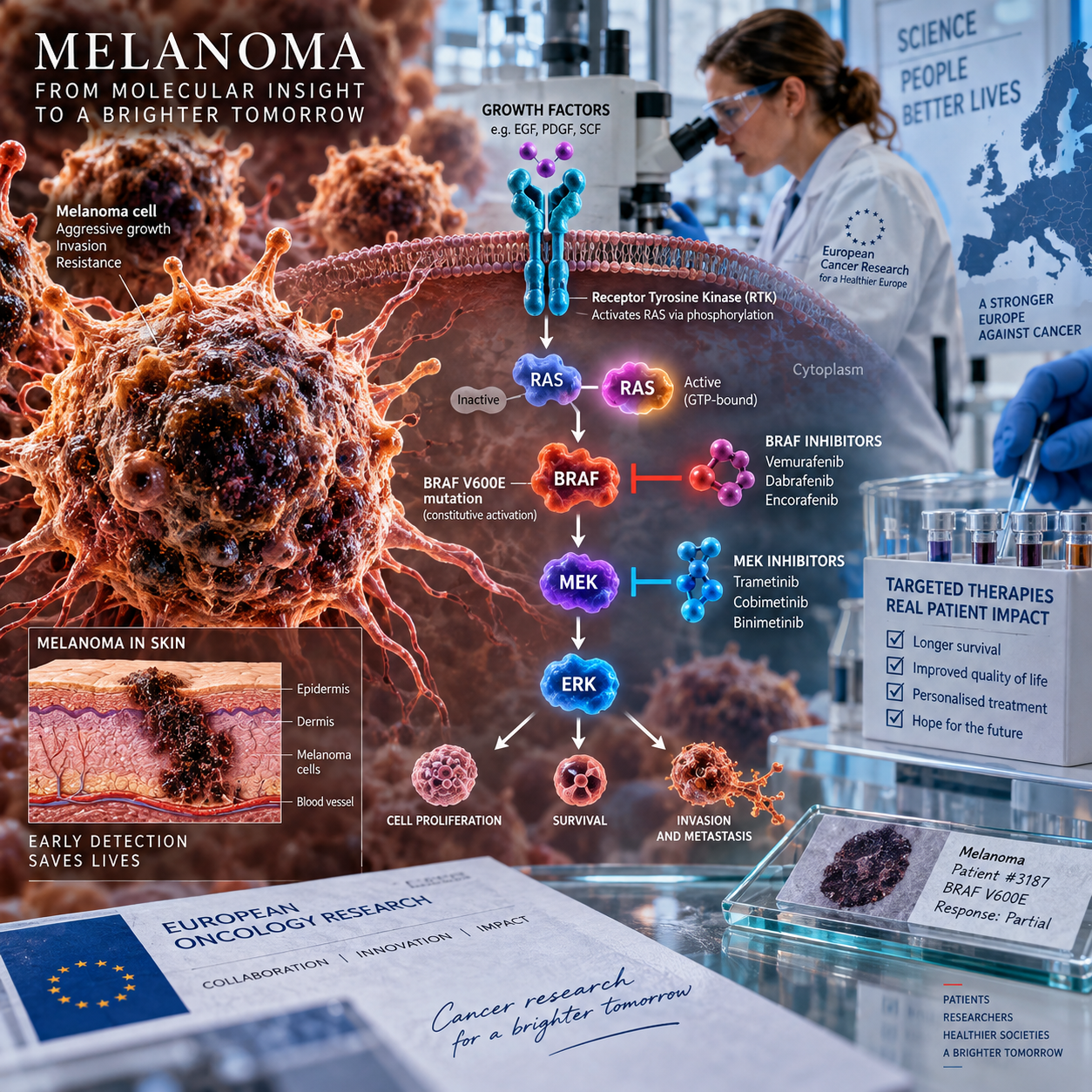
Targeted therapies have reshaped treatment for advanced melanoma by matching medicines to specific molecular changes in a tumour. This approach is especially important in metastatic melanoma, where BRAF and other genomic alterations can influence treatment selection, expected benefits, resistance patterns, and clinical trial eligibility.
How targeted therapy has changed melanoma treatment
Targeted therapy treats melanoma according to its tumour biology, particularly actionable changes in the MAPK signalling pathway. It has given clinicians a faster, more mechanism-specific option for some people with unresectable or metastatic disease, while immunotherapy, surgery, radiotherapy, and supportive care remain important parts of comprehensive treatment.
Earlier systemic treatments often acted broadly on dividing cells or produced inconsistent responses. Molecular research revealed that many melanomas depend on abnormal growth signals, allowing drug development to focus on proteins that drive tumour proliferation. The most established example is a melanoma containing a pathogenic BRAF mutation, commonly a change affecting the V600 position.
When a suitable alteration is confirmed, a treatment plan can be built around the tumour’s vulnerabilities. Targeted therapy may reduce tumour burden relatively quickly in an appropriate patient, although the response may not be durable for everyone. Immunotherapy can produce longer-lasting disease control in some patients, but its effects may develop more gradually and its immune-related adverse effects can be serious.
The practical change is therefore broader than the arrival of a new drug. Treatment decisions now combine stage, symptoms, tumour genomics, previous therapy, comorbidities, patient preferences, and access to clinical trials. European research networks, including the European Organisation for Research and Treatment of Cancer, help evaluate these strategies across different healthcare systems.
Key molecular targets in melanoma
BRAF is the best-established molecular target in melanoma, but biomarker testing must also consider NRAS and other genomic alterations. Molecular profiling identifies whether a tumour contains an alteration that has an approved therapy, supports a clinical trial, or changes the interpretation of available options.
The MAPK signalling pathway relays growth signals through a sequence that includes RAS, RAF, MEK, and ERK proteins. A BRAF mutation can keep this pathway switched on, encouraging uncontrolled melanoma-cell division. BRAF inhibitors block the abnormal BRAF signal, while MEK inhibitors act further downstream.
NRAS mutations can also activate MAPK signalling, but they do not currently have the same established, broadly applicable targeted-treatment pathway as BRAF V600 alterations. Other changes may affect signalling, cell-cycle control, DNA repair, or the tumour microenvironment. Their clinical importance varies, and some findings remain primarily investigational.
Testing usually involves tumour tissue, although circulating tumour DNA and other blood-based methods are being studied. A pathology and molecular report should be interpreted alongside clinical information. A detected alteration does not automatically mean that a treatment will work, because mutation type, tumour heterogeneity, previous treatment, and resistance mechanisms all matter.
BRAF and MEK inhibitor combinations
BRAF/MEK inhibitor combinations block the MAPK pathway at two points and are an established targeted approach for BRAF-mutant advanced melanoma. Dual inhibition can improve pathway suppression and reduce some paradoxical signalling effects associated with BRAF inhibition alone.
Commonly used treatment principles pair a BRAF inhibitor with a MEK inhibitor. The exact medicine, regulatory indication, and treatment setting depend on local guidance, disease characteristics, and prior therapy. Combination treatment may produce substantial tumour shrinkage in patients whose melanoma is driven by an appropriate BRAF alteration, often with an onset that is clinically useful when disease is symptomatic or rapidly progressive.
The benefits come with trade-offs. Patients may experience fever, fatigue, skin changes, joint or muscle symptoms, diarrhoea, nausea, liver-test abnormalities, eye problems, or effects on heart function. Some combinations have characteristic adverse-effect patterns, so clinicians use laboratory tests, symptom reviews, dermatological assessment, cardiac monitoring, or ophthalmic evaluation when indicated.
These medicines are not interchangeable with treatment for every melanoma. They require a confirmed actionable alteration, careful review of contraindications, and monitoring for toxicity. They also do not eliminate the possibility of relapse. A useful clinical question is not simply whether a tumour can respond, but whether the expected speed of response outweighs the risks and whether another strategy may offer more durable control.
Treatment resistance and strategies to overcome it
Melanoma can show primary resistance from the beginning or acquire resistance after an initial response to targeted therapy. Resistance reflects tumour evolution, pathway reactivation, alternative signalling, and differences between cancer-cell populations within the same patient.
Primary and acquired resistance
Primary resistance means that the disease fails to respond adequately despite a target being present. The alteration may not be the true dominant driver, or additional genomic and biological factors may limit drug activity. Acquired resistance develops after treatment has controlled the cancer for a period. The tumour can restore MAPK signalling through changes in BRAF, NRAS, MEK, or other pathway components, or activate bypass routes.
Tumour heterogeneity makes this difficult. A biopsy from one lesion may not represent every metastasis, and resistant cells may already exist before treatment begins. Imaging, clinical assessment, laboratory monitoring, and occasionally repeat tissue or blood-based testing help teams understand changing disease behaviour.
Research strategies
Clinical research is evaluating sequential treatment, combinations that target parallel pathways, intermittent schedules, next-generation inhibitors, and medicines aimed at resistance-specific alterations. These approaches remain context-dependent. A promising laboratory result does not guarantee benefit in patients, and combinations can increase toxicity as well as pathway suppression.
Resistance should therefore be managed through a planned strategy rather than a single rescue drug. Multidisciplinary review can consider immunotherapy, radiotherapy for selected lesions, surgery in carefully chosen situations, another targeted approach, or a clinical trial.
Targeted therapy alongside immunotherapy
Targeted therapy and immunotherapy are complementary melanoma treatments with different mechanisms, time courses, and toxicity profiles. Targeted drugs act on tumour signalling, whereas immunotherapy helps the immune system recognise and attack cancer cells.
Immune checkpoint inhibitors directed at pathways such as PD-1, with or without CTLA-4 or LAG-3 targeting in selected settings, can provide durable control for some people. Their limitations include delayed response, inflammatory immune-related adverse events, and the need for prompt management of problems affecting organs such as the bowel, liver, lungs, endocrine glands, or skin.
Targeted therapy may be considered when a BRAF mutation is present, particularly if rapid disease control is clinically important. Immunotherapy may be favoured in other circumstances, including when durable benefit is prioritised and the patient’s health allows potential immune toxicity. There is no universal sequence that suits every person.
Combining targeted therapy with immunotherapy or changing the sequence is an active area of research. Early approaches have shown that biological rationale alone is insufficient: overlapping toxicity, treatment interruptions, and the quality of long-term benefit must be assessed in controlled clinical trials. Decisions should account for disease tempo, symptoms, organ function, prior treatments, autoimmune conditions, and patient goals.
Emerging directions in melanoma research
Emerging melanoma research is refining biomarkers, tracking tumour evolution, and testing adaptive combinations through clinical trials. The goal is to predict benefit more accurately and delay resistance without exposing patients to unnecessary toxicity.
Biomarker development is moving beyond a single mutation. Researchers are studying mutation context, gene-expression patterns, immune-cell activity, circulating tumour DNA, and characteristics of the tumour microenvironment. A blood test that detects changing tumour DNA may eventually complement imaging, although its role and reliability vary by setting and remain under evaluation.
Adaptive treatment designs adjust therapy according to response, residual disease, or emerging resistance. Other studies are investigating novel targets, antibody-drug conjugates, cellular therapies, personalised vaccines, and combinations involving MAPK inhibition and immune modulation. These treatments should be described as investigational until evidence and regulatory approvals establish their role.
European collaborative research is particularly valuable because large, well-designed studies can recruit diverse patient groups and use shared standards for pathology, imaging, safety reporting, and outcome assessment. Patients considering a trial should ask about its phase, scientific rationale, known risks, alternatives, travel requirements, and how treatment decisions are made if the disease changes.
What targeted therapy means for patients and clinical teams
For patients, targeted therapy begins with accurate biomarker testing and continues with structured monitoring, shared decisions, and specialist multidisciplinary care. Eligibility depends on tumour biology, melanoma stage, previous treatment, overall health, organ function, and the availability of an approved therapy or clinical trial.
A typical clinical discussion covers:
- Whether the pathology confirms melanoma and whether molecular profiling is complete.
- Which alteration was found, including the exact BRAF variant when relevant.
- Whether the proposed treatment is approved for the disease setting or is being studied in a trial.
- How quickly a response may be needed and what other treatments are reasonable alternatives.
- Which adverse effects require an urgent call, such as persistent fever, severe diarrhoea, breathing difficulty, vision changes, or marked weakness.
- How imaging, blood tests, heart assessment, skin review, and symptom monitoring will be scheduled.
Care often involves medical oncologists, dermatologists, pathologists, radiologists, surgeons, radiation oncologists, specialist nurses, pharmacists, and other professionals. This team-based model helps connect molecular results with the patient’s wider health and practical circumstances.
Targeted therapy has expanded the options for melanoma, but it is not a universal cure and does not replace immunotherapy, surgery, radiotherapy, or palliative care when those treatments are appropriate. Patients should request a clear explanation of the evidence, uncertainties, and alternatives before starting treatment. Informed decisions are strongest when molecular science and the person’s priorities are considered together.
Frequently asked questions
Which melanoma patients may be eligible for targeted therapy?
Patients with advanced or metastatic melanoma may be eligible when biomarker testing identifies an alteration with an approved targeted treatment, most notably an appropriate BRAF mutation. Stage, prior treatment, general health, organ function, and local regulatory guidance also affect eligibility.
Why is molecular testing important before treatment?
Molecular testing can identify actionable changes, prevent the use of an unsuitable targeted drug, and reveal clinical-trial opportunities. Results must be interpreted by the oncology team because a mutation alone cannot predict response with certainty.
How do BRAF and MEK inhibitors work together?
BRAF inhibitors block abnormal signalling at the BRAF protein, while MEK inhibitors act further along the MAPK pathway. Blocking both points can strengthen pathway suppression and reduce some signalling effects seen with BRAF inhibition alone.
Can melanoma become resistant to targeted therapy?
Yes. Primary resistance occurs when treatment fails from the outset; acquired resistance develops after an initial response. Repeated assessment and multidisciplinary review can help identify alternative treatment or research options.
How are targeted therapies being studied in clinical trials?
Trials assess new drugs, combinations, treatment sequences, biomarkers, and strategies for delaying resistance. Researchers compare safety and patient outcomes in defined populations, so eligibility and potential benefit vary by study.