Combination Therapies in Advanced Melanoma: Approaches, Benefits and Challenges

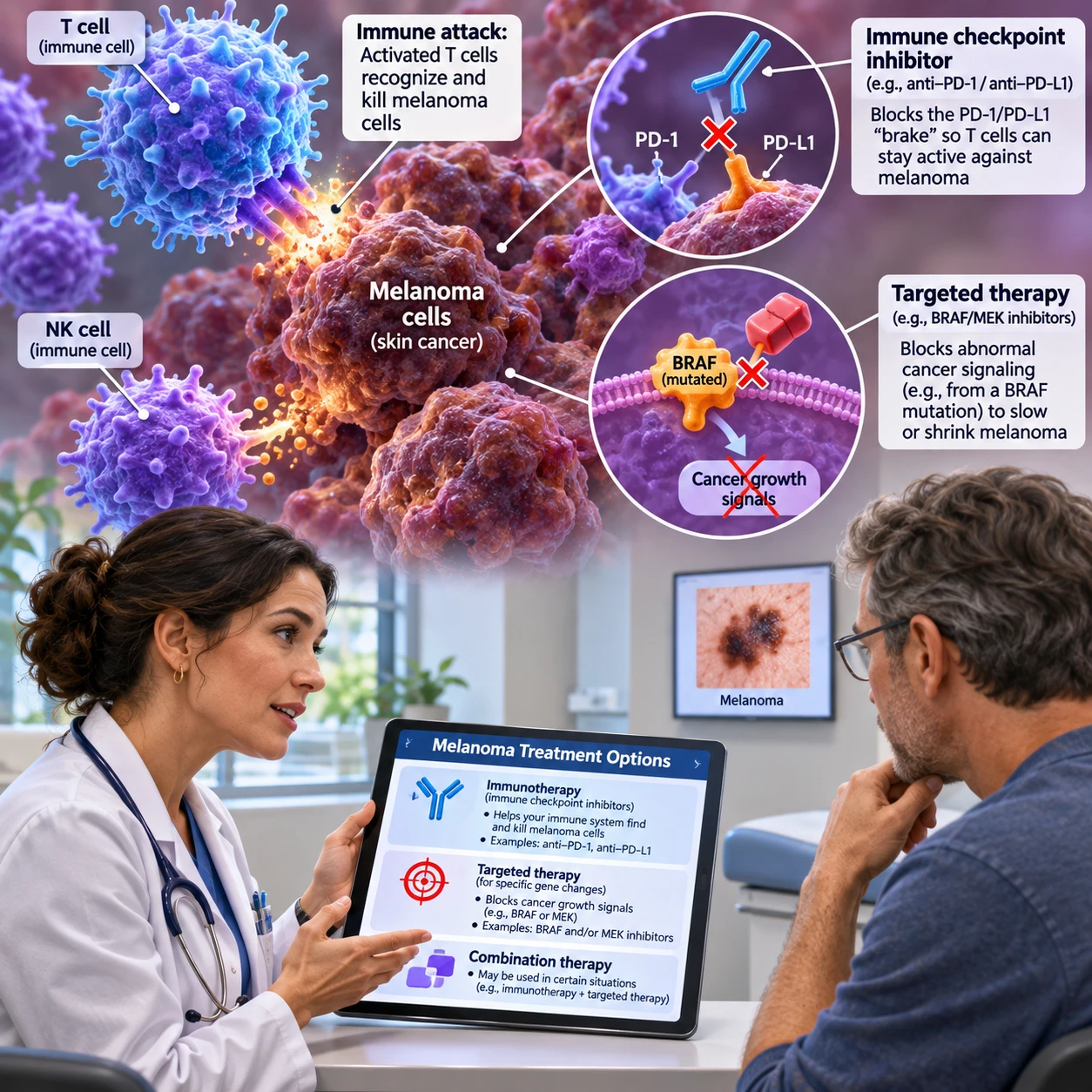
Advanced melanoma can behave differently from one person to another, so treatment decisions depend on more than the stage of disease. Combination therapies bring together medicines with distinct effects to improve tumour control or reduce the chance that cancer cells will evade treatment. The main approaches include immune checkpoint inhibitors and, for melanoma with a BRAF mutation, targeted BRAF and MEK inhibitors.
Combining medicines can offer meaningful benefits, but it can also increase side effects or create difficult treatment choices. Specialists consider tumour testing, the pace and location of disease, a person’s health and preferences, and evidence from clinical trials. No combination works for everyone.
Why combine treatments for advanced melanoma?
Combination therapy uses two or more treatments with different mechanisms to control advanced melanoma. The aim is to strengthen or broaden the response while addressing the ways tumours can resist a single treatment.
Melanoma cells can grow through multiple biological pathways and may change under treatment pressure. A medicine that blocks one pathway can shrink a tumour, yet some cancer cells may survive by using another route. Combining treatments can make it harder for the disease to escape that pressure, although resistance can still develop.
Different combinations pursue different goals. Immune checkpoint inhibitors help immune cells recognise and attack cancer. Targeted medicines act on specific growth signals inside tumour cells. Researchers also study combinations that pair these strategies, but adding drugs does not automatically improve outcomes: it may also increase toxicity, and the best sequence or pairing can vary.
For patients, the practical question is whether the potential gain is appropriate for the disease and the person’s circumstances. Treatment decisions should be based on clinical evidence and specialist assessment, not on the assumption that more medicines are always better.
Immunotherapy combinations
Immunotherapy combinations pair medicines that release different brakes on the immune response. In advanced melanoma, combinations involving anti-PD-1 therapy and anti-CTLA-4 therapy can provide a broader immune effect, but may cause more immune-related adverse events than treatment with one checkpoint inhibitor.
PD-1 and CTLA-4 are immune checkpoint proteins that help regulate immune activity. Tumours can exploit these controls to avoid attack. Anti-PD-1 medicines block one checkpoint, while anti-CTLA-4 medicines block another. Using both may strengthen immune activation in some patients, but a stronger response can also mean the immune system is more likely to affect healthy organs.
Immune-related adverse events may involve the skin, bowel, liver, lungs, hormone-producing glands or other tissues. Some are mild; others can be serious and require prompt assessment, treatment interruption or immune-suppressing medicines. Symptoms can arise during treatment and sometimes after it ends, so patients should know whom to contact and report new symptoms quickly.
The potential benefit has to be weighed against this additional risk. A specialist team may consider disease features, other health conditions, the need for disease control, and a patient’s priorities when discussing a checkpoint inhibitor combination. Monitoring and clear communication are essential parts of treatment, not optional extras.
Targeted therapy combinations
BRAF and MEK inhibitor combinations target two points in a tumour growth pathway and are used for advanced melanoma with a confirmed BRAF mutation. Tumour testing is needed because this approach is not suitable for melanomas without the relevant mutation.
BRAF mutations can activate signals that promote melanoma growth. BRAF inhibitors block part of this pathway; MEK inhibitors act farther along it. Using both can improve pathway suppression and help delay some forms of resistance compared with blocking BRAF alone. However, cancer cells may still adapt, and the response can change over time.
Targeted therapy may be considered when rapid control of disease is an important concern, but treatment choice depends on the full clinical picture. Possible side effects vary by medicine and can include fever, fatigue, skin changes, joint or muscle symptoms, and effects on the heart or eyes. The treating team explains which symptoms need urgent attention and what monitoring is appropriate.
Unlike checkpoint immunotherapy, which aims to mobilise immune recognition of cancer, BRAF/MEK treatment directly interrupts tumour growth signalling. This distinction helps explain why their patterns of response, adverse effects and resistance differ. It does not establish one approach as universally preferable.
Choosing an approach for an individual patient
The right approach for an individual patient depends on tumour biology, disease context, overall health and personal priorities. A melanoma specialist uses these factors to discuss available options and their uncertainties with the patient.
Tumour characteristics matter first. Testing a tumour for a BRAF mutation can identify whether BRAF/MEK inhibitors are an option. Other pathology and clinical findings may also inform decisions, while no single biomarker can predict every person’s response to immunotherapy.
The team may also consider how quickly the disease is changing, where it has spread, symptoms, previous treatments and whether treatment needs to begin promptly. Health conditions, medicines a person already takes, and the likelihood of managing particular side effects can influence the balance of benefits and risks.
Shared decision-making brings these clinical factors together with what matters to the patient: treatment schedule, monitoring, possible effects on daily life, and tolerance for uncertainty. Questions about alternatives, likely follow-up, and what happens if treatment stops working are reasonable. The decision is individual and may be revisited as the disease or a person’s circumstances change.
Benefits, risks and practical trade-offs
Combination therapies may improve tumour control or delay resistance, but they can also increase treatment burden and adverse effects. The balance differs between immunotherapy and targeted therapy and between individual patients.
Checkpoint inhibitor combinations can produce durable benefit for some people, but their immune-related toxicities can affect multiple organs and may need urgent care. BRAF/MEK inhibitors can act directly on a mutation-driven pathway, yet side effects may require dose changes, treatment breaks or additional monitoring. Neither approach guarantees a response, and resistance or disease progression remains possible.
Before starting treatment, patients and clinicians can discuss a few practical points:
- What is the treatment intended to achieve in this situation, and how will response be assessed?
- Which symptoms should prompt a same-day call or emergency assessment?
- What appointments, tests or monitoring are expected, and who coordinates them?
- What options may be considered if the melanoma progresses or side effects become difficult?
Reliable information and early reporting of symptoms can help the care team respond to complications. Still, monitoring cannot prevent every adverse event. The aim is to recognise and manage problems promptly while preserving a treatment plan that remains appropriate.
Research priorities and clinical trials
Clinical trials help researchers determine which combinations work best, for whom, and in what order. Key questions include how to sequence immunotherapy and targeted therapy, how to predict resistance, and which biomarkers can guide treatment more reliably.
Researchers are studying why some tumours respond while others do not, how resistance develops, and whether features of the tumour or immune environment can help select treatment. Trials also assess new combinations and strategies to reduce toxicity. Results need careful interpretation: findings from one patient group or trial design may not apply to every person with advanced melanoma.
For European patients, a melanoma specialist or research centre can explain whether a clinical trial is available and what participation involves. Trial options depend on eligibility, location and the study’s stage. Taking part is voluntary, and the research team should describe the possible benefits, risks, alternatives and practical commitments before consent.
Progress depends on comparing treatments fairly and reporting both benefits and harms. That evidence can refine future choices, but it does not remove the need for an individual discussion grounded in current clinical guidance.
Frequently asked questions
What does combination therapy mean in advanced melanoma?
Combination therapy means using two or more treatments together or as part of a planned strategy to control advanced melanoma. The medicines may target different immune checkpoints or different parts of a tumour growth pathway.
How do immunotherapy and targeted therapy combinations differ?
Immunotherapy combinations, such as anti-PD-1 with anti-CTLA-4 therapy, affect immune regulation so the body can attack cancer. BRAF/MEK inhibitor combinations block tumour growth signals and require a confirmed BRAF mutation.
Are combination treatments suitable for everyone?
No. Suitability depends on tumour features, health, prior treatment, disease context and a patient’s preferences. A specialist can explain which options are supported by evidence for an individual situation.
What side effects can combination therapies cause?
Checkpoint inhibitor combinations can cause immune-related inflammation in organs such as the bowel, liver, lungs or hormone glands. BRAF/MEK inhibitors can cause effects such as fever, fatigue, skin or muscle symptoms, and some heart or eye problems. Side effects vary, so new symptoms should be discussed promptly with the care team.